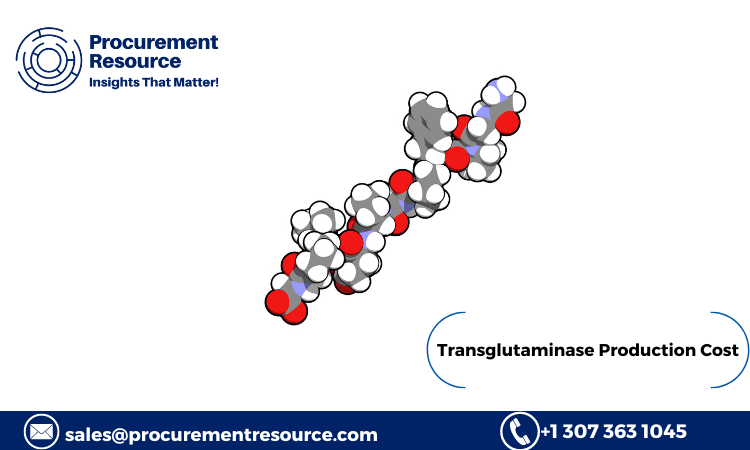
Transglutaminase, commonly known as “meat glue,” is an enzyme that has gained significant importance in the food industry due to its ability to catalyse the formation of covalent bonds between proteins, enhancing the texture and appearance of food products. This enzyme plays a critical role in the production of various processed foods, including meat, fish, dairy, and bakery products. The growing demand for improved food quality and the increasing trend toward processed and packaged foods have driven the expansion of the transglutaminase market.
The production process of transglutaminase involves several intricate steps, each crucial for ensuring the enzyme’s effectiveness and quality. The enzyme is typically produced through microbial fermentation, where specific strains of bacteria or fungi are employed to synthesize transglutaminase. This process is not only efficient but also environmentally friendly, making it a preferred method in the food industry.
Manufacturing Report and Process
The manufacturing process of transglutaminase can be divided into several key stages: microbial fermentation, enzyme extraction, purification, and formulation.
Request For Sample: https://www.procurementresource.com/production-cost-report-store/transglutaminase/request-sample
- Microbial Fermentation: The production of transglutaminase begins with the cultivation of microbial strains, such as Streptomyces mobaraensis or Escherichia coli, in a controlled environment. These microorganisms are selected for their ability to produce high yields of transglutaminase. The fermentation process takes place in large bioreactors, where the microbes are provided with the necessary nutrients, temperature, and pH conditions to optimise enzyme production. This stage is crucial as it determines the overall yield and quality of the enzyme.
- Enzyme Extraction: Once the fermentation process is complete, the microbial cells are harvested and subjected to various extraction techniques to isolate the transglutaminase enzyme. This typically involves cell disruption methods, such as homogenisation or sonication, followed by centrifugation to separate the enzyme from the cell debris. The extracted enzyme is then concentrated for further purification.
- Purification: The purification process is essential to ensure that the transglutaminase is free from impurities and contaminants that could affect its performance. This stage involves techniques such as filtration, chromatography, and precipitation. These methods help to isolate the enzyme in its purest form, which is necessary for its application in the food industry. The purity of the enzyme is a critical factor in determining its effectiveness in food processing.
- Formulation: After purification, the transglutaminase is formulated into a product that can be easily used by food manufacturers. This may involve blending the enzyme with stabilisers, preservatives, or other additives to enhance its shelf life and functionality. The final product is then packaged in various forms, such as powder or liquid, depending on the intended application.
The entire manufacturing process of transglutaminase is designed to ensure high efficiency, minimal waste, and adherence to strict quality control standards. The advancements in biotechnology have further streamlined the production process, making it more cost-effective and sustainable.
Raw Material Costs
The cost of raw materials is a significant factor in the overall production cost of transglutaminase. The primary raw materials used in the production process include microbial strains, culture media, and nutrients required for fermentation.
- Microbial Strains: The selection of microbial strains is critical as it directly impacts the yield and quality of the transglutaminase enzyme. High-quality strains that are genetically modified for enhanced production are often more expensive but result in higher yields, making them cost-effective in the long run.
- Culture Media: The culture media used in fermentation typically consist of a combination of carbon and nitrogen sources, vitamins, minerals, and other growth factors. The cost of these ingredients can vary depending on their quality and availability. Optimising the culture media composition is essential to reduce costs while maintaining high enzyme production levels.
- Nutrients and Additives: Various nutrients and additives are required to support microbial growth and enzyme production during fermentation. These include glucose, peptones, amino acids, and other growth enhancers. The cost of these nutrients can fluctuate based on market conditions and availability.
- Energy and Utilities: The production process involves significant energy consumption, particularly in maintaining the optimal temperature, pH, and aeration conditions during fermentation. The cost of energy and utilities, such as water and steam, also contributes to the overall production cost.
To manage costs effectively, manufacturers often focus on optimising the fermentation process, using cost-effective raw materials, and adopting energy-efficient technologies. The use of alternative raw materials, such as agricultural by-products, is also being explored to reduce costs and enhance sustainability.
Latest News
The transglutaminase market has seen several recent developments that have the potential to impact its production and application in the food industry.
- Technological Advancements: Recent advancements in biotechnology have led to the development of genetically engineered microbial strains that can produce transglutaminase more efficiently. These strains are designed to have higher enzyme yields and reduced production times, leading to cost savings and increased production capacity. Additionally, new purification techniques are being developed to enhance the purity and functionality of the enzyme, opening up new applications in the food industry.
- Regulatory Changes: The regulatory landscape for transglutaminase production and use in food products is evolving. Several countries are reviewing their regulations to ensure the safe use of the enzyme in food processing. These changes are likely to impact the market, particularly in regions where regulatory approvals are stringent. Manufacturers are focusing on compliance with these regulations to maintain their market presence.
- Market Expansion: The demand for transglutaminase is growing in emerging markets, driven by the increasing consumption of processed and convenience foods. Manufacturers are expanding their production capacities and exploring new markets to meet this demand. The Asia-Pacific region, in particular, is witnessing significant growth in the transglutaminase market, supported by the booming food processing industry.
- Sustainability Initiatives: Sustainability is becoming a key focus area in the production of transglutaminase. Manufacturers are exploring ways to reduce their environmental footprint by adopting greener production methods, such as using renewable energy sources and reducing waste generation. The use of sustainable raw materials and the implementation of circular economy practices are also gaining traction in the industry.
- Partnerships and Collaborations: Companies in the transglutaminase market are increasingly forming partnerships and collaborations to drive innovation and expand their product portfolios. These collaborations are aimed at developing new applications for transglutaminase in the food industry and beyond, such as in the pharmaceutical and cosmetics sectors. Strategic alliances are also helping companies to enhance their market reach and customer base.
Conclusion
The transglutaminase production process is a complex yet efficient method that has significant implications for the food industry. With advancements in technology, optimisation of raw material costs, and the evolving market landscape, the production and application of transglutaminase are poised for continued growth. Staying updated with the latest developments in the industry is crucial for manufacturers and stakeholders to capitalise on the opportunities presented by this versatile enzyme.
 Famous Hindi